



Intempt
A brass periscope rising out of the waves with a glowing lens.

Marketing says they drove the pipeline. Sales says otherwise.

The Data Analyst agent ties every campaign to a won deal on one customer record. Ends the MQL-vs-revenue argument.

Start for free
G2
0.0on G2
10B+events
500M+users
7+years profitable
50+enterprises

Every campaign traced to revenue.

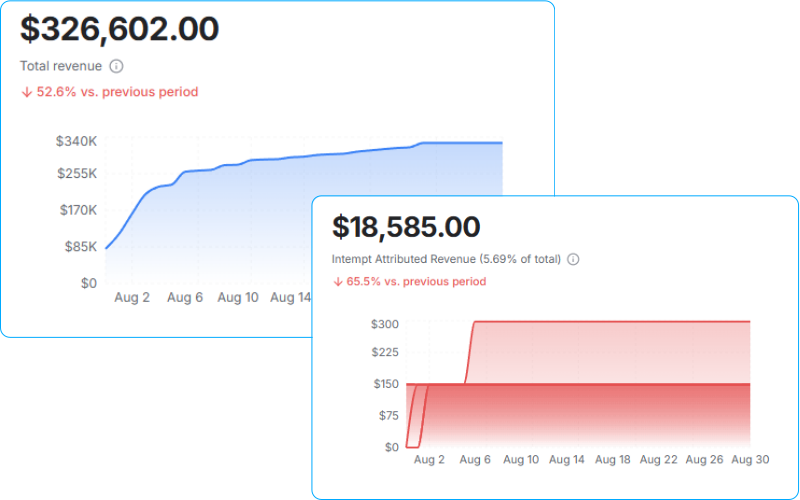
Every marketing touchpoint tracked across the full journey with its actual revenue contribution, not its share of form fills.

  • Multi-touch across every channelOne chain from the first click to the paid conversion, with nothing dropped in between.
  • Four models, one reportFirst-touch, last-touch, linear and time-decay side by side rather than in four exports.
  • The gap is statedLast-click and multi-touch are shown against each other, so the difference is visible.
Every campaign traced to revenue

Spend judged on revenue, not leads.

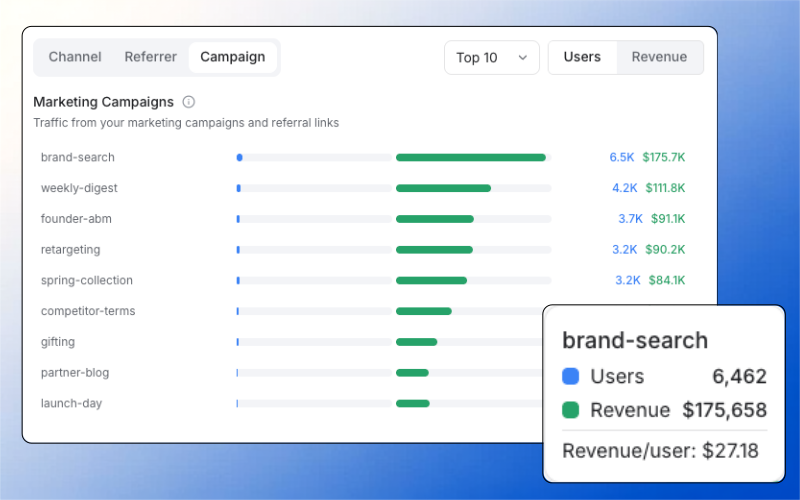
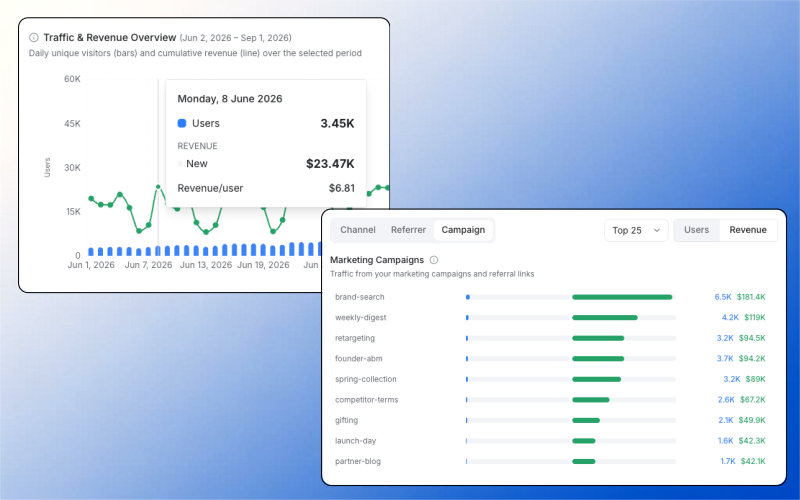
Ad platform spend connected to Stripe or Shopify revenue, so CAC, payback period and 90-day LTV are visible per campaign alongside what it cost.

  • CAC, payback and LTV per campaignCalculated from billing data, not from a conversion value someone typed in.
  • Spend next to revenuePer channel and per ad set, in the same view, without a join.
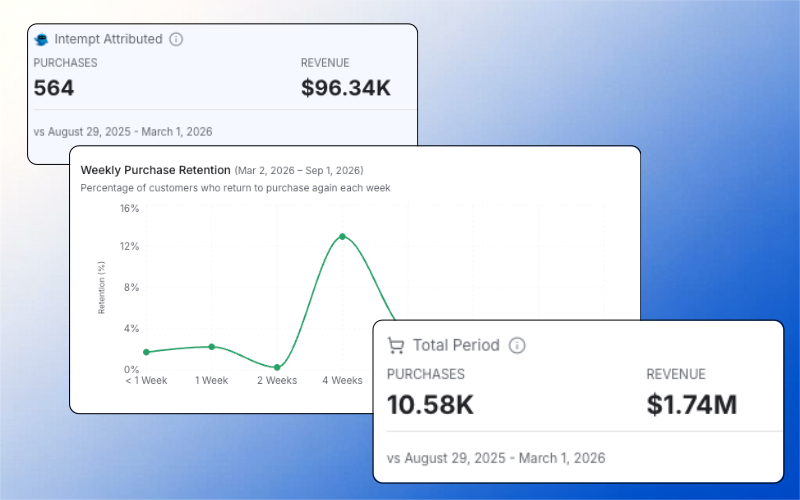
  • Trials that do not retainA campaign that fills the top of the funnel and loses them later shows up as itself.
Spend judged on revenue, not leads

One record for marketing and sales.

Both teams work from the same customer profile and the same attribution model - no handoff between marketing and sales, just a shared number that ends the argument.

  • One identity across both teamsMarketing and sales touchpoints attach to the same person and the same account.
  • Influenced pipeline per campaignPipeline is attributed back to the campaigns that touched it.
  • Outbound attributed per sequenceSales activity carries its own attribution rather than landing in a bucket.
One record for marketing and sales

What attribution tools cost, by side of the market

ToolPriceBuilt for
HockeyStack$999-2,499/moB2B, full-funnel
DreamdataFree tier availableB2B, account-level tied to CRM revenue
Triple WhaleFree tierEcommerce, Shopify-native
Northbeam$1,000-2,500/moEcommerce brands spending $500K+/month on media

The market is split. The B2B tools start around $1,000 a month; the serious ecommerce tools are priced for brands spending half a million monthly on paid media. Very little serves a company that is both B2B and ecommerce, or either one at small scale.

On why this matters: only about 1 in 5 marketers say they are confident in last-click attribution, and marketing leaders rank measuring true incrementality and reducing wasted spend as their top two attribution priorities for 2026.

Sources: eMarketer attribution confidence survey · vendor pricing pages 2026.

Explore more ways Intempt drives revenue.

Connected outcomes across the platform.

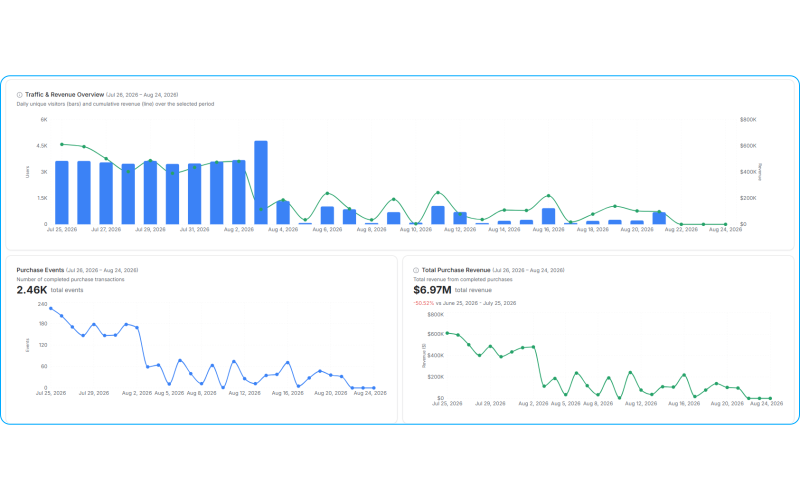
Traffic and revenue analytics

Teams love it

They stopped stitching tools andhired one system.

StockInvest

Acquisition and retention are one connected motion. Personalizing the path before signup only pays off when the same system carries the user through onboarding afterward.

Anonymous traffic was not turning into registered users, and acquisition and retention were run as two separate problems. We ran Experiences on the anonymous visitor flow to put the right content and CTAs in front of each visitor, then handed new signups to automated Journeys for onboarding and deeper engagement.

455,396

users instrumented

Read the full research
FieldsUSA

Judge experiments on revenue per visitor instead of conversion rate. A variant can win on conversions and still lose on revenue, and repeat buying only shows up when the whole journey is in one view.

High-intent shoppers browsed a large, specialized outdoor catalog, and browsing, product interest and purchase history sat in different places. We unified them into one customer view, then ran real-time personalization, intent-based segmentation and timely follow-ups on top of it, judging experiments on revenue per visitor.

Read the full research
Hoperfy

Build the pipeline on observed signals. When follow-ups trigger on intent, the team spends its time on the users who are genuinely engaging.

Static lead lists and timeline-based follow-ups were hiding who was actually engaging. We ran a signal-led outbound pipeline where follow-ups fire on real behavior: outbound replies, onboarding progress and product usage.

Read the full research

Frequently askedquestions.

Multi-touch attribution distributes revenue credit across every touchpoint a customer interacted with before converting, instead of giving all of it to one. It matters because last-click systematically over-credits the channels that close and under-credits the ones that create demand.

Intempt Analytics

End the credit argument with data.

Connect your campaigns and billing. Your first multi-touch report is live before the next budget conversation starts.

Start for free