




Intempt
A hermit crab painting a wave on a canvas at an easel.

Landing pages without the developer queue.

You are the marketer, the designer and the person who files the dev ticket, so the page waits until you have a spare evening. The Brand Designer agent builds it from the same brief as the email and the SMS, inside your Brand Kit guardrails. On-brand, A/B testable, and live without a developer.

Start for free
G2
0.0on G2
10B+events
500M+users
7+years profitable
50+enterprises

Build the page with the campaign.

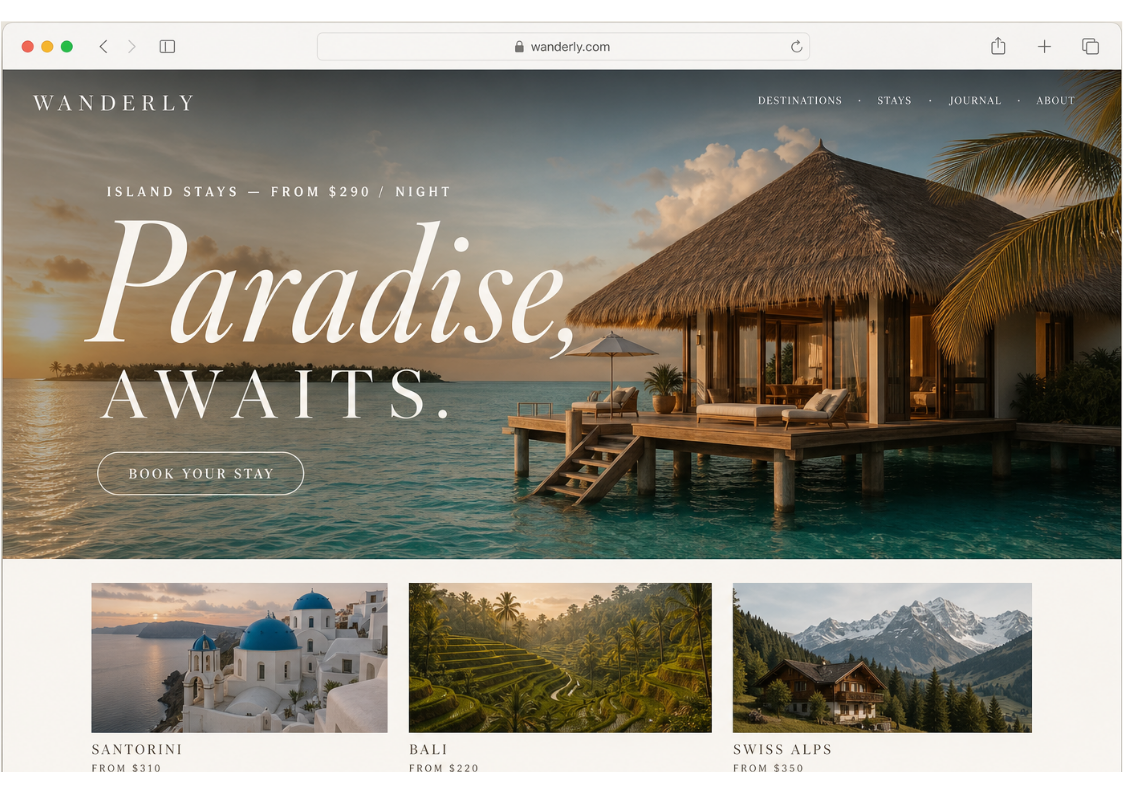
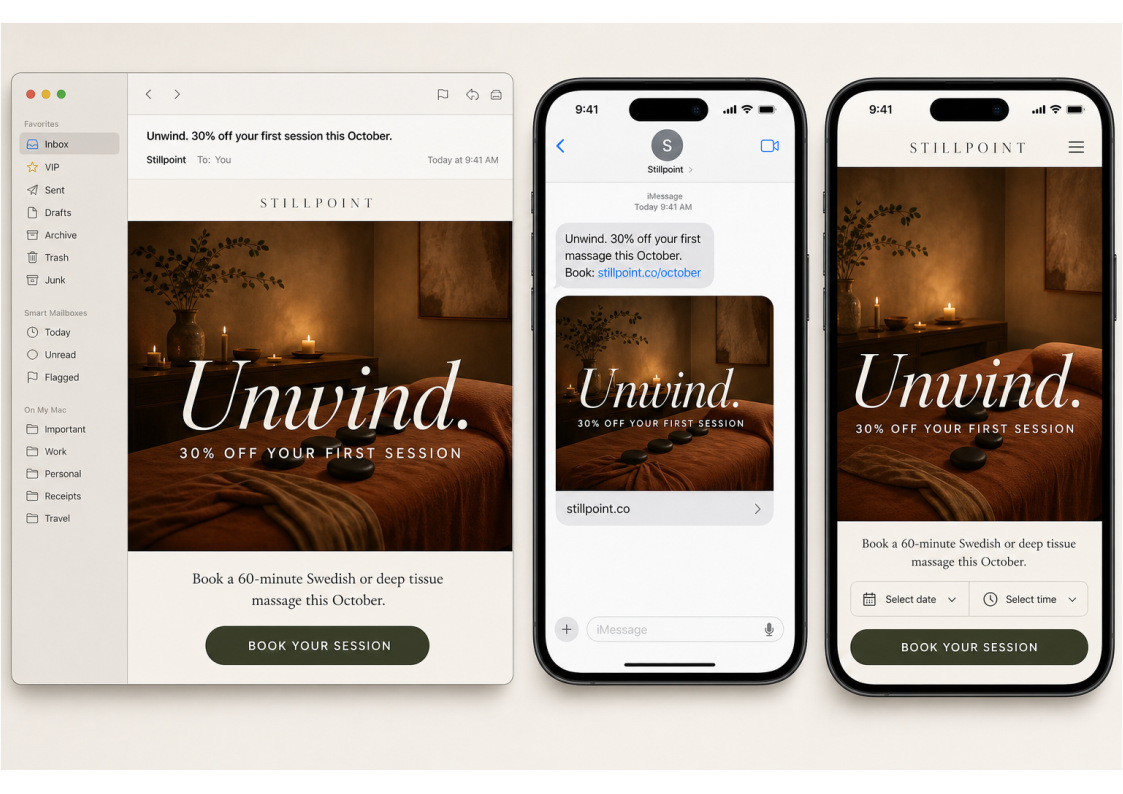
Intempt generates the landing page alongside the email and SMS from the same brief. Same hero, same headline, same offer. Save the layout as a recipe and every later campaign runs the same play. The page launches when the campaign does, not two weeks later.

  • Same brief as the messagesThe page and the email, SMS and push all come from one brief.
  • Brand Kit applied automaticallyNo off-brand pages, no manual styling step.
  • Multi-device adaptive by defaultRenders cleanly on the device your traffic is actually on.
Build the page with the campaign

No developer required.

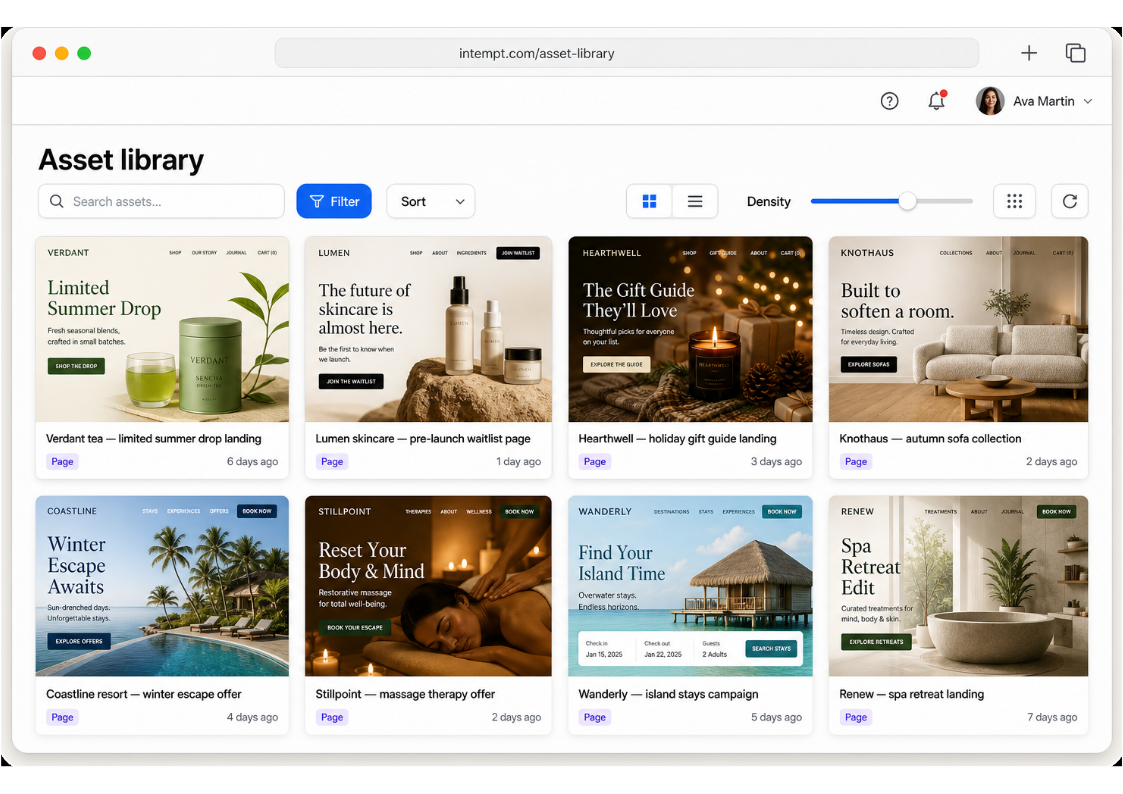
Pages live on Intempt's infrastructure. No CMS, no code handoff and deployment queue. Generate, review, publish. The URL is live. No web agency on retainer to keep it up either - hosting, the domain and the editor are all in the product.

  • Hosted, on your domainCustom domains are supported and there is no deployment ticket.
  • Publish in one clickLive in seconds, not sprints.
  • Edit or importAdjust the layout in the editor, or import an existing design from Figma or Canva.
No developer required

Test the page alongside the message.

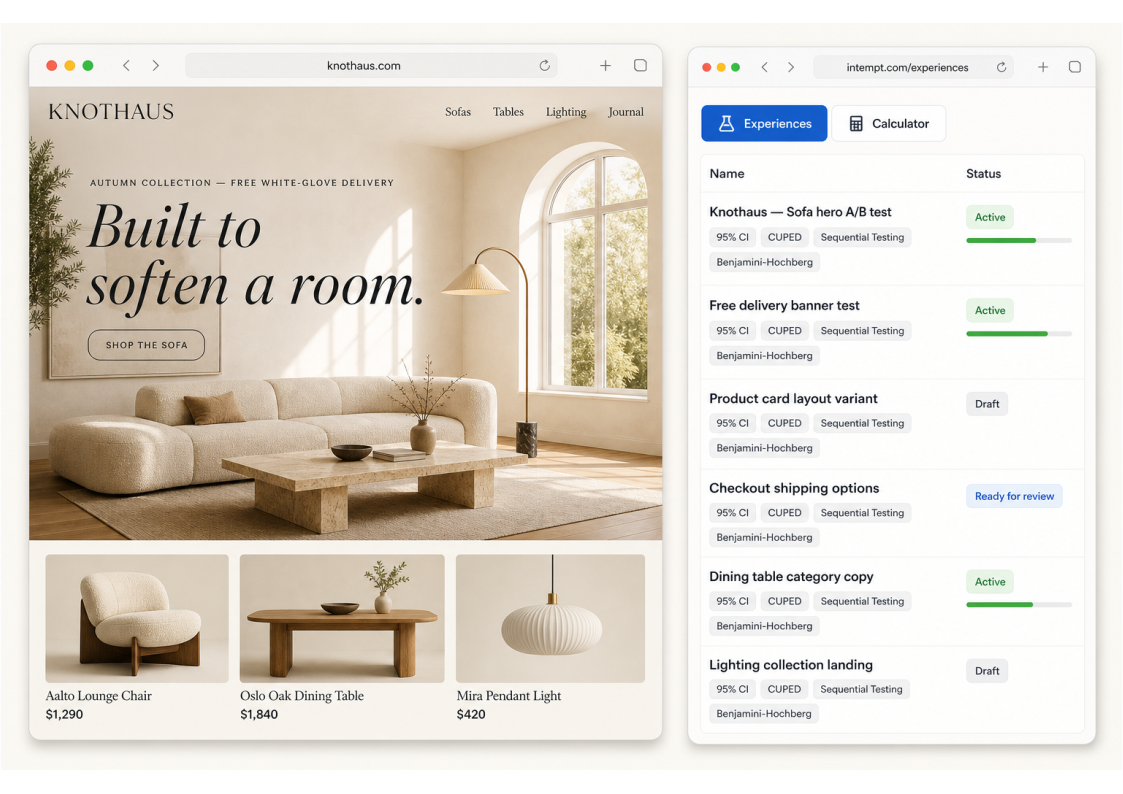
Intempt Pages is wired into Intempt's Experiment infrastructure. Create a variant, split traffic, let the data pick the winner. The page test and the email that drove the traffic finally sit in one report.

  • Variants from the builderCreate the A/B variant in the same place you built the page.
  • Split and winner detectionTraffic allocation and the result run through Intempt Experiment.
  • One CDP behind the resultEmail, page and ad data share a profile, so the click traces through to the purchase.
Test the page alongside the message

Personalized per visitor through your CDP.

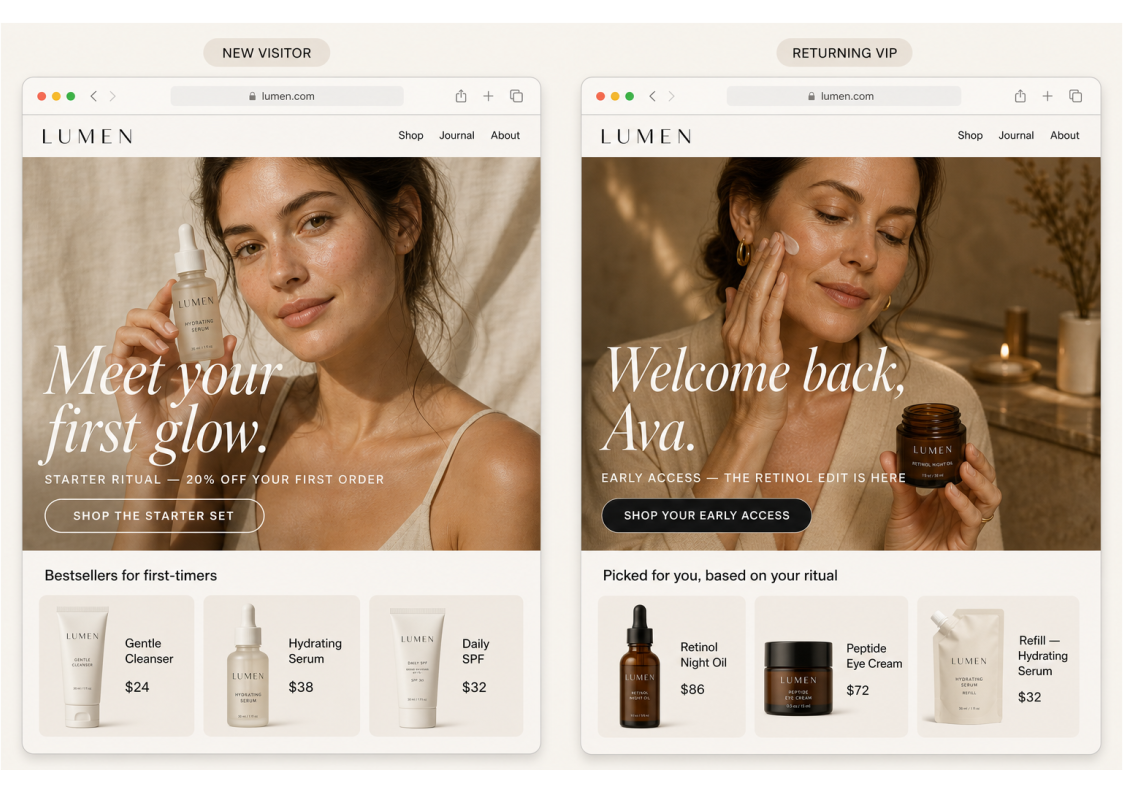
Intempt Pages reads from your CDP and personalizes headlines, offers, and product recommendations per segment. New, returning, and high-LTV customers see different pages.

  • Segment-level personalization without codeNew, returning, and high-LTV customers see different pages.
  • Recommendations from behaviourPulled from browse and purchase history on the same profile.
  • One rule across three surfacesThe same personalization rule governs the page, the email and the SMS.
Personalized per visitor through your CDP

Built for the way marketers actually work.

Seven workflows. One canvas.

Product photography

Studio-grade product photos for every SKU. No camera, no set.

Pack shots, on-model photography, and lifestyle scenes from a single product image. Identity-preserved, brand-locked, and ready for PDPs, ads, and every channel.

On-model and pack-shot product photography generated by Intempt

Wired into the toolsyour team already opens.

Slack, Stripe, Twilio, SendGrid, Gmail, Google Calendar, Firebase, Apache Kafka, AWS. Blu Agent operates them for you without a browser tab.

See every integration
JavaScript
Node JS
Apple
Stripe
Gmail
Google Calendar
Google Meet
Twilio
SendGrid
Slack
Amazon SES
Webhook
Apache Kafka
Amazon S3
Firebase Cloud Messaging

Teams love it

They stopped stitching tools andhired one system.

StockInvest

Acquisition and retention are one connected motion. Personalizing the path before signup only pays off when the same system carries the user through onboarding afterward.

Anonymous traffic was not turning into registered users, and acquisition and retention were run as two separate problems. We ran Experiences on the anonymous visitor flow to put the right content and CTAs in front of each visitor, then handed new signups to automated Journeys for onboarding and deeper engagement.

455,396

users instrumented

Read the full research
FieldsUSA

Judge experiments on revenue per visitor instead of conversion rate. A variant can win on conversions and still lose on revenue, and repeat buying only shows up when the whole journey is in one view.

High-intent shoppers browsed a large, specialized outdoor catalog, and browsing, product interest and purchase history sat in different places. We unified them into one customer view, then ran real-time personalization, intent-based segmentation and timely follow-ups on top of it, judging experiments on revenue per visitor.

Read the full research
Hoperfy

Build the pipeline on observed signals. When follow-ups trigger on intent, the team spends its time on the users who are genuinely engaging.

Static lead lists and timeline-based follow-ups were hiding who was actually engaging. We ran a signal-led outbound pipeline where follow-ups fire on real behavior: outbound replies, onboarding progress and product usage.

Read the full research

Landing pages,answered.

No. Pages generates, hosts, and deploys without a developer, and without an agency or a consultant setting it up first. The setup you do own is your Brand Kit, and that is a guided skill you run yourself in the product. You only need a developer for custom CMS integrations or complex backend logic.

Intempt Design

The page behind every campaign. Built in the same brief.

Give Blu the campaign brief once and the page, the email, and the SMS all come off it. You hold the strategy layer - the offer, the segment, the standard - and the agent builds inside your Brand Kit guardrails. On-brand, mobile-first, A/B testable, and live when the campaign is, not two weeks after. Nothing publishes until you approve it, and no agency or consultant has to set it up first.

Start for free